Loading...
elearning Campus BlogAre Turtles Amphibians
Are Turtles Amphibians
What comes to your mind when you see turtles? Are they amphibians or reptiles, as they live both on land and water? It confuses everyone who does not know their characteristics.
Turtles are reptiles, not amphibians, because they possess all characteristics that are required to be in the class Reptilia. Turtles have dry skin, breathe through lungs, and lay hard-shelled eggs on land, so they fit in this class.
This detailed guide will help you understand exactly what turtles are, whether they are amphibians or not, and how they are classified, and explore more interesting facts that make them part of the class Reptilia.
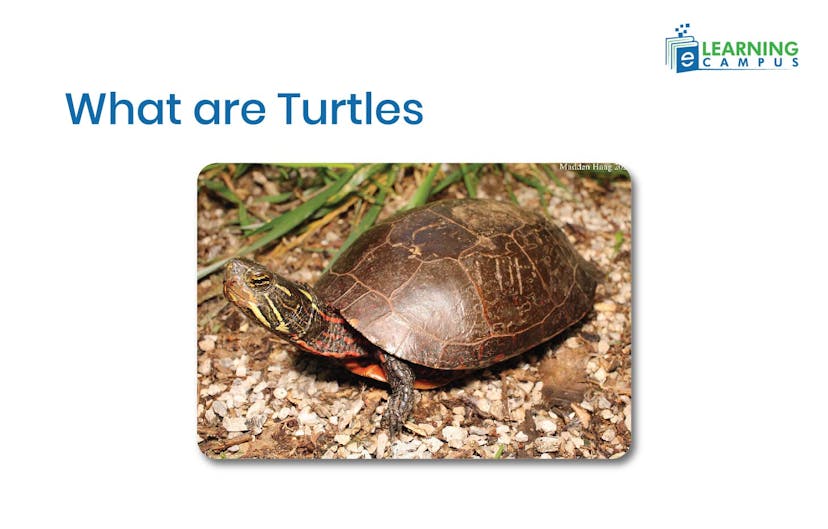
What are Turtles
Turtles are one of the oldest reptile groups with fossils dating back over 220 million years to the late Triassic period. Lizards and crocodiles are also included in this group.
- Unlike lizards and snakes, which are part of the group squamata, turtles belong to testudines, a lineage that split from other reptiles over 250 million years ago, while lizards and snakes evolved flexible, Elongated bodies and often rely on quick movements to survive, turtles retained a rigid shell for protection, giving them a slower but highly defensive lifestyle.
- Crocodiles, on the other hand, belong to Archosauria, the same group that includes birds. Crocodiles are more closely related to birds than to turtles despite their aquatic and terrestrial similarities.
- This highlights that although turtles, lizards, snakes, and crocodiles are all reptiles, turtles are evolutionary distinct, representing one of the earliest reptilian lineages with a unique combination of shell protection, longevity, and slow but steady adaptation to live in both water and land habitats.
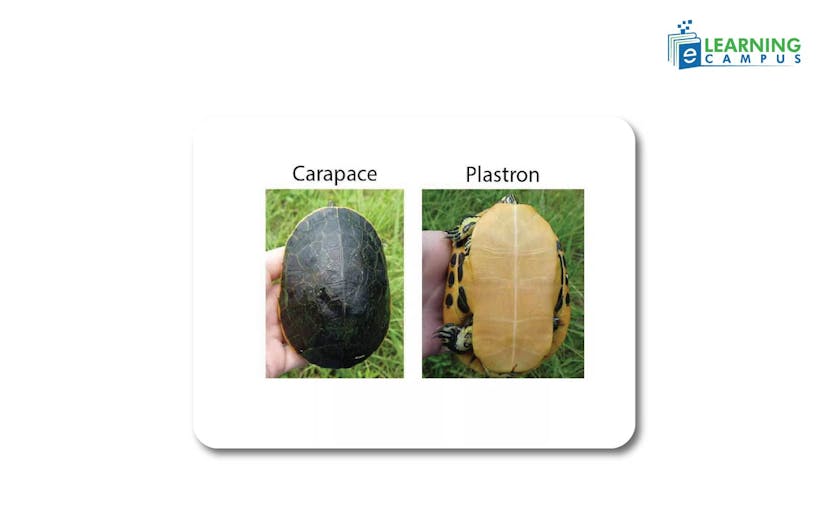
→ Turtles have a protective shell, which is made of two parts.
Carapace
Carapace is the upper, protective shell of turtles, tortoises, or terrapins. It protects the turtle’s body, supports its skeleton, and helps regulate its temperature. It is made of :
- Bone (Fused with turtles’ ribs and spine)
- Scutes (the outer layer made of keratin, the same material as human nails).
Plastron
The plastron is the hard, bony lower shell that protects the turtle's belly. It works together with the carapace to form the complete shell.
Adaptation in Turtles
Turtles survive in diverse environments because of well well-coordinated nervous system and specialized sensory adaptation. These features help them to move, find food, avoid predators, and navigate long distances.
Nervous System in Turtles
Turtles have well well-developed nervous system that includes the brain, spinal cord, and nerves. Their brain is smaller than mammals, but it controls important functions like movement, breathing, and sense perception. The spinal cord helps coordinate limb movement and sensory adaptation in turtles
Sensory Adaptation in Turtles
Turtles have adapted senses that help them survive on land and in water. They have sharp vision, can see colors, and detect movement easily. Their strong sense of smell helps them find food, while their ears pick up low-frequency sounds and vibrations.
Respiratory Adaptation in Turtles
Turtles have special respiratory features that help them survive both on land and in water. They breathe air using lungs, but their lungs are large and efficient for long dives. Instead of chest movement, they use muscles around the shell to pull air in and out.
Some aquatic turtles can also absorb small amounts of oxygen through skin, throat lining, or cloaca, allowing them to stay underwater longer. These adaptations help turtles conserve energy and breathe efficiently in different environments.
H3 Hibernation or Brumation in Winter
During hibernation, many turtles enter brumation, which is similar to hibernation but occurs in reptiles. Their body activity slows down, they eat very little, move less, and their heart rate and metabolism drop.
Aquatic turtles often stay at the bottom of ponds, absorbing small amounts of oxygen from the water, while land turtles bury themselves in soil or leaf litter. This helps them save energy and survive cold temperatures.
If you are struggling in science, get help from our Expert science Tutors.
Are Turtles Amphibians
No, turtles are not amphibians. They are reptiles.
Amphibians have thin skin, go through the process of metamorphosis, lay soft-jelly like eggs without shells, and usually live their first part of their life in water, breathing through gills. But turtles have hard, dry or scaly skin, with no process of metamorphosis, lay hard-shelled eggs, and breathe through lungs.
Why are turtles reptiles, not amphibians?
The features of a turtle are given in detail, showing that turtles are not amphibians. Here are the details of the features;
Cold-blooded
Both reptiles and amphibians are cold-blooded species. Turtles are cold-blooded, which means their bodies do not regulate their temperature on their own. They need sun or shade to stay warm.
Scaly skin
Turtles have scaly, rough, and hard skin, which prevents them from losing water from their body and protects them from injury. But amphibians have soft, thin, and porous skin that helps them
breathe and absorb water.
Live on land or water
Amphibians can live both in water and on land. They spend their initial larval stage in water and then on land. Turtles can live on land, in water, or both, depending on the species, such as;
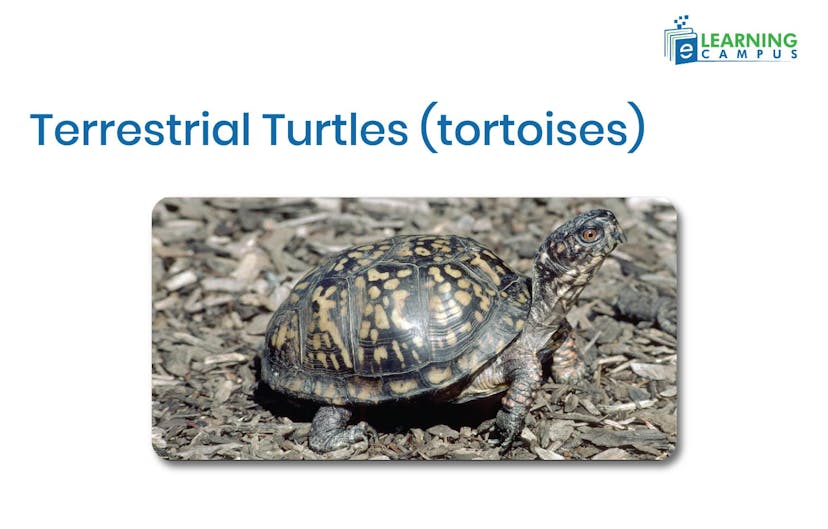
Terrestrial Turtles (tortoises)
Terrestrial turtles are land-dwelling reptiles that mostly live on dry land rather than in water. They have dome-shaped shells for protection, strong legs for walking, and feed on plants, fruits, and sometimes insects. Unlike aquatic turtles, they rarely swim and have adapted to a terrestrial lifestyle.
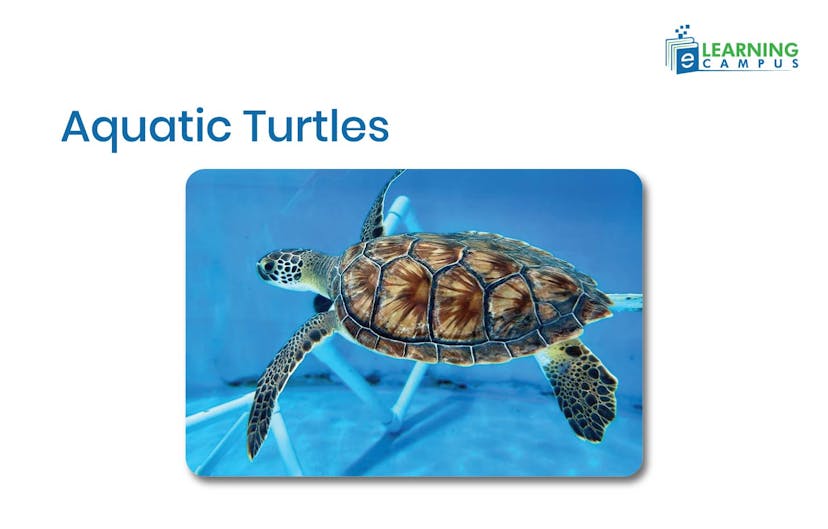
Aquatic Turtles
They mostly live in water such as ponds, rivers, or lakes. They have flatter, streamlined shells for swimming, webbed feet or flippers, and spend most of their time in water but come onto land to bask or lay eggs.
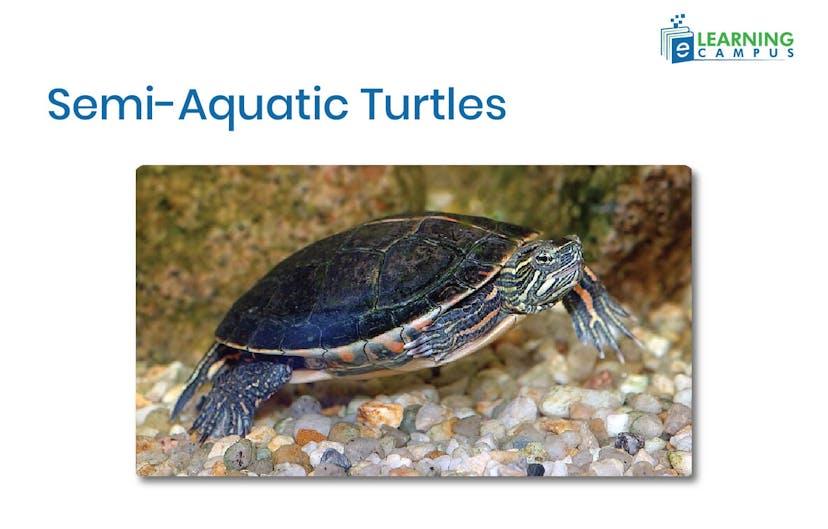
Semi-Aquatic Turtles
Semi-aquatic turtles live on land and in water. They are adapted to swim with webbed feet but also walk on land. They often ask on;ogs or shores and lay eggs on land.
Hard-Shell eggs
The eggs of turtles are leathery shell eggs that cover the babies from drying out. On the other hand, amphibians have jelly-like eggs without a shell; they must lay their eggs in water to prevent them from drying out.
H3 Breathe through the Lungs
Turtles can breathe through their lungs throughout their life. Due to hard skin, they do not have pores and cannot breathe through their skin. But Amphibians have gills and porous skin to breathe. When they become adults, they develop lungs, and then they breathe from their lungs.
Heart structure
Turtles have a chambered heart with two atria and one partially divided ventricle. This structure helps keep oxygen-rich and oxygen-poor blood mostly separate. They can also reroute blood when underwater to save oxygen.
Internal fertilization
Reproduction happens inside the mother’s body, ensuring that eggs are fertilized before being laid. After fertilization, the female forms eggs inside her body and then travels to land to dig an egg nest and lays the eggs.
Are Sea Turtles Amphibians
Sea turtles are not amphibians that are reptiles.sea turtles are reptiles, even though they live in the sea, but for basking and laying eggs, they have to come out of the ocean. Some sea turtles bask on beaches or rocks to warm their bodies and maintain good health.
Sea turtles are reptiles because they have reptile characteristics such as;
- They have hard, scaly, and dry skin.
- They breathe with their lungs.
- They laid hard-shelled eggs on land.
- Their body temperature depends on the environment; they have no larval stage, and hatch from eggs like tiny turtles, not tadpoles.
So living in water does not make them amphibians because their body structure and body structure is reptilian.
Are Snappy Turtles Amphibians
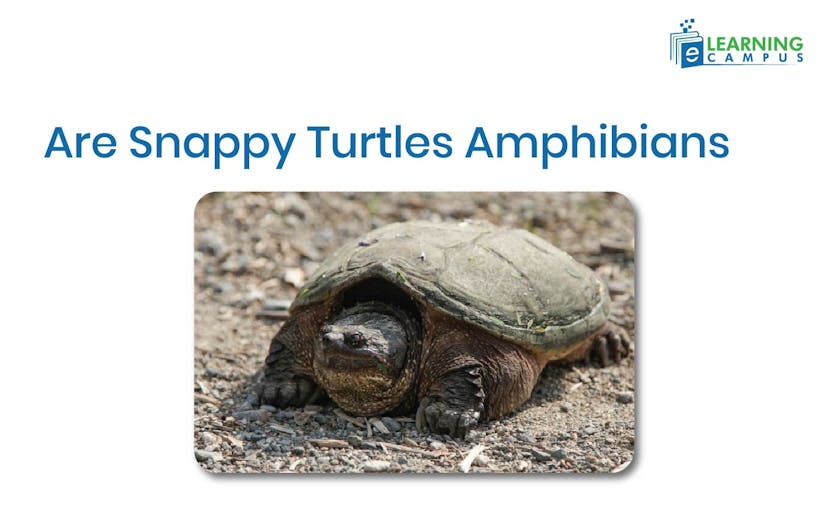
No, snappy turtles are not amphibians; they are reptiles.
Snappy turtles are large freshwater turtles known for their strong jaws, aggressive behavior when threatened, and powerful bite. They have a wide range of habitats, bi most prefer to live in slow-moving water with some soft sand or muddy areas.
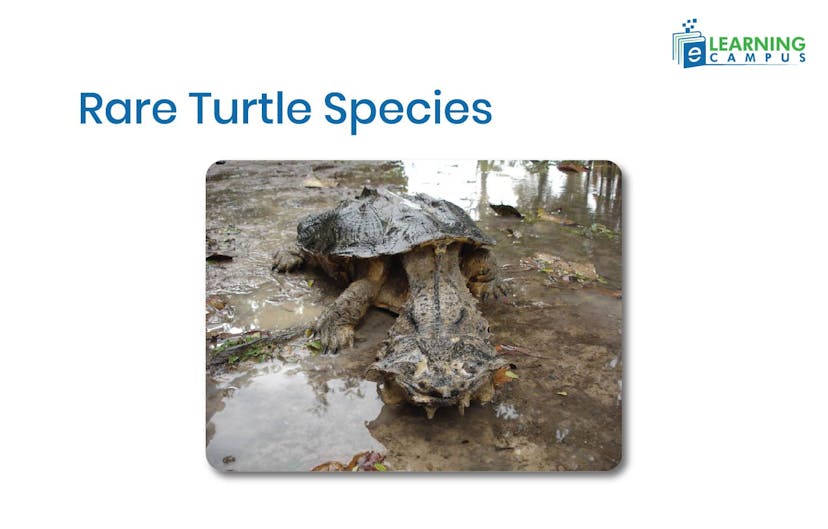
Rare Turtle Species
- Mata-mata Turtles are found in American rivers. Mata-mata turtles have a flat, leaf-like shell and a camouflaged head that looks like bark or leaves. It is a slow-moving aquatic predator that uses its appearance to suddenly attack prey.
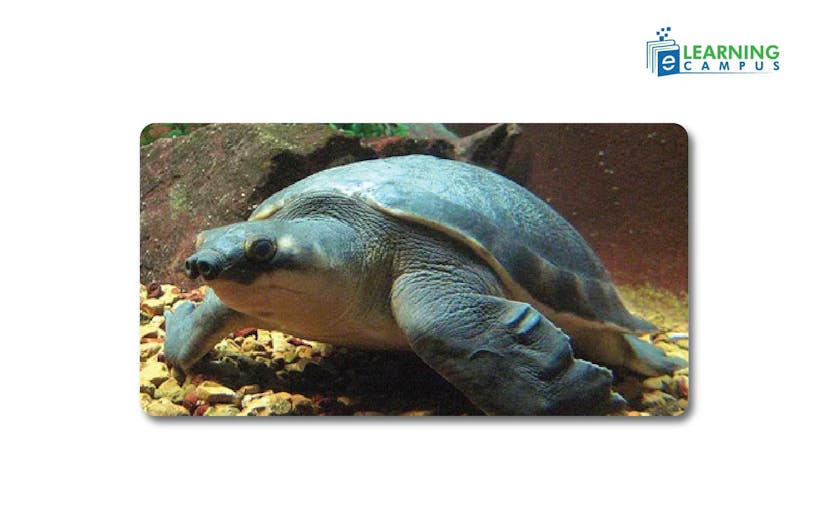
- Pig-nosed turtles are native to northern Australia and New Guinea. This turtle has a distinctive snout like a pig, webbed flipper, and is mostly aquatic. It can stay submerged for long periods and feed on plants and small animals.
Interesting Facts about Turtles?
- Many turtles live 50 to 100 years, and some species, like the Galapagos tortoise, can live over 150 years.
- Turtles can hold their breath for a long time. Some freshwater turtles can stay underwater up to 30 hours by slowing down their metabolism.
- In many turtle species, the temperature of the nest tends to produce more females, while cooler nests produce more males.
- Sea turtles travel thousands of kilometers between their feeding ground and nesting beaches. Females usually return to the same beach where they were born to lay eggs, which is called natal homing.
- Turtles can sense the magnetic fields, ocean currents, and temperature, which help them navigate during their long migration. After nesting season, they swim back to their feeding areas, repeating this long migration throughout their life.
- Certain turtles can regenerate parts of their shells if damaged.
- Many turtles excrete salt through special glands near their eyes.
- Turtles keep ecosystems balanced by spreading seeds, cleaning waterways, and providing shelter for other animals. They eat dead animals and plants, keeping water and soil healthy.
Conclusions
Turtles are reptiles, not amphibians, even though some of their species spend most of their time in water; but living in water does not mean that they are amphibians. Their body structure, fertilization process, skin type, or respiration all these characteristics satisfy the conditions that are needed to become Reptilians. Our blog will help you understand that turtles are reptiles, and you will explore more interesting facts about nature.
Learn science online with expert Tutors
Want to learn more about nature or science topics? Our expert online science tutors can help you. They will help with your homework, preparation for exams, and cover key topics. Get benefits with our online tutoring service and boost your grades in Science now!

Related Amphibians Articles
Curated science articles exploring amphibian species, biology, and habitats.