Loading...
elearning Campus BlogAre Alligators Amphibions
Are Alligators Amphibions

Most people get confused about whether alligators are amphibians or reptiles. Because they live both on land and in water. Amphibians live their larval stage in water, but then live on land. They have porous and soft skin for breathing until they develop lungs. But Alligators do not possess these features that make them different from amphibians.
Living in water does not make an animal an amphibian; there are other major differences that make them distinct from the amphibian group. In this blog, we provide complete details on alligators, amphibians, and reptiles, how they differ from crocodiles, and reveal some interesting facts.
What are Alligaters
Alligators are large reptiles that belong to the family Alligatoridae. They have long, strong tails, sharp teeth, and armored skin. They are cold-blooded carnivores and have existed for over 37 million years, making them true fossils. Alligators live mostly in rivers, lakes, and swamps in the USA and China. They are closely related to crocodiles and caimans, or salamanders.
Why are Alligators Reptiles, not Amphibians?
Some characteristics of reptiles and amphibians are common, which can cause confusion, which is totally understandable. Here we explain the features of Alligators that make them a reptile, not an amphibious. Here are the details of the features;
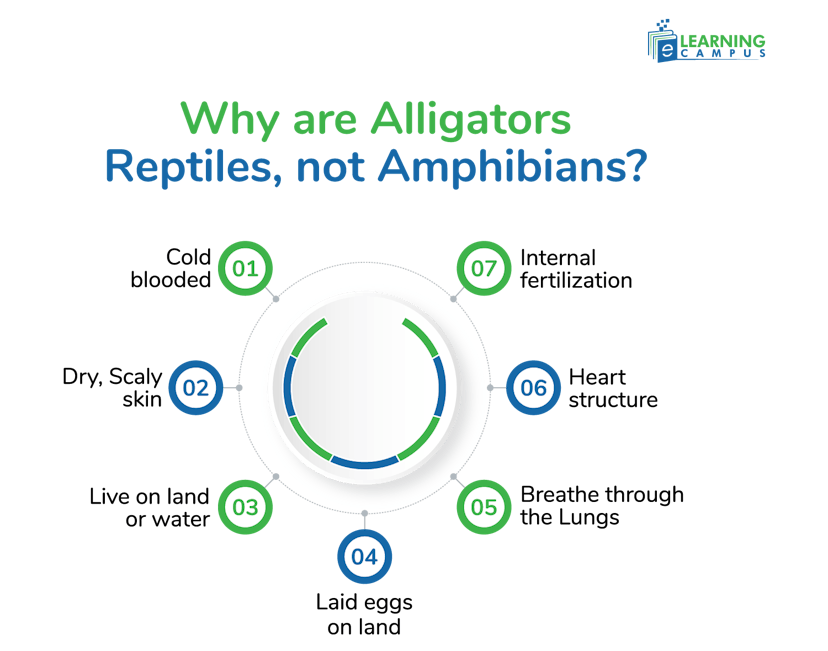
Cold-blooded
Both reptiles and amphibians are cold-blooded species. Alligators are cold-blooded, which means their bodies do not regulate their temperature on their own. They need sun or shade to stay warm.
Dry, Scaly skin
Alligators have hard and scaly skin that is protective armor that keeps alligators safe, prevents water loss, and helps them survive in their habitat. But amphibians have soft and porous skin. Amphibians need moist skin to breathe partly through it. Alligators cannot do this
Live on land or water
Amphibians can live both in water and on land. They spend their initial larval stage in water and then on land. Even though alligators live in both places. Living in water does not make them animals as amphibians.
Laid eggs on land
The eggs of alligators are leathery shell eggs on land. On the other hand, amphibians have jelly-like eggs without a shell; they must lay their eggs in water, which is a big biological difference.
Breathe through the Lungs
Alligators breathe through their lungs throughout their life. Due to hard skin, they do not have pores and cannot breathe through their skin. But Amphibians have gills and porous skin to breathe. When they become adults, they develop lungs, and then they breathe from their lungs.
Heart structure
Alligators have a four-chambered heart, with two atria and a ventricle, which allows better separation of oxygenated and deoxygenated blood. They also have a special opening called the foramen of Panizza, which helps control blood flow while diving underwater. This helps them to stay underwater for long periods.
Internal fertilization
Fertilization occurs internally, and the female later lays fertilized eggs on land. This method protects the eggs from water loss and increases the chance of survival, which is a typical characteristic of reptiles.
Are Alligators Amphibians?
No, Alligators are not amphibious. They are reptiles.
People get confused about whether alligators are amphibians. Because they live both on land and in water, although they have some similarities with amphibians, this makes people think that alligators are amphibians. But they are reptiles.
Alligators have dry and scaly skin.
- They are cold-blooded and have dry and scaly skin.
- No metamorphosis takes place like an amphibions.
- They breathe with lungs throughout their life.
- They lay hard-shelled eggs on land.
Are Crocodiles Amphibions?
No, crocodiles are not amphibians; they are reptiles due to the following reasons:
- They are cold-blooded and have dry and scaly skin.
- No metamorphosis takes place like an amphibions.
- They breathe with lungs throughout their life.
- They lay hard-shelled eggs on land.
They possess all the characteristics that reptiles should have. So the crocodiles are reptiles.
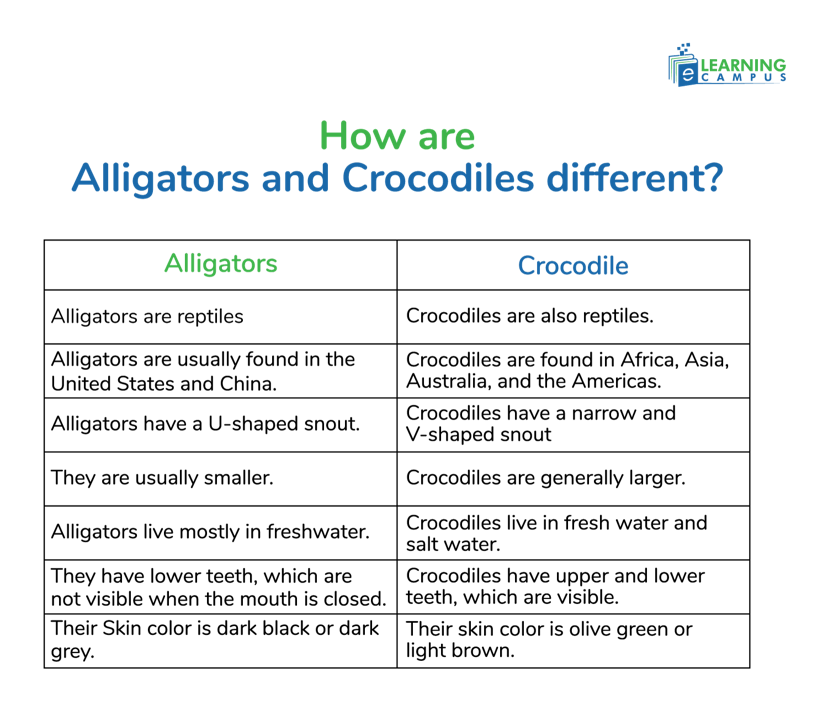
How are Alligators and Crocodiles different?
Alligators and crocodiles are not the same. They may look similar, but they are different. Both are reptiles. Here are the differences;
Interesting Facts About the Alligator
Alligators are remarkable apex predators that have existed for millions of years. Beyond their fearsome reputation, they exhibit complex social behaviors and unique biological traits.
- Alligators have one of the strongest bites in the animal kingdom.
- Their powerful jaws can exert pressure strong enough to crush turtle shells.
- They have been living, existing for over 37 million years
- The temperature of the next determines whether babies are male or female.
- Alligators can live 50 years or more in the wild.
- They go through thousands of teeth in a lifetime.
- They can hold their breath underwater for up to 2 hours.
Conclusion
Alligators are ancient and fascinating reptiles. They are cold-blooded carnivores with powerful bites, strong tails, and protective behaviour toward their young. Their long history, adaptability, and unique characteristics make them a significant example of survival in nature.
Learn science online with expert Tutors
Want to learn more about nature or science topics? Our expert online science tutors can help you. They will help with your homework, preparation for exams, and cover the main topics. Get benefits with our online tutoring service and boost your knowledge and grades in Science now!

Related Amphibians Articles
Curated science articles exploring amphibian species, biology, and habitats.