Loading...
elearning Campus BlogAre Dolphins Mammals?
Are Dolphins Mammals?
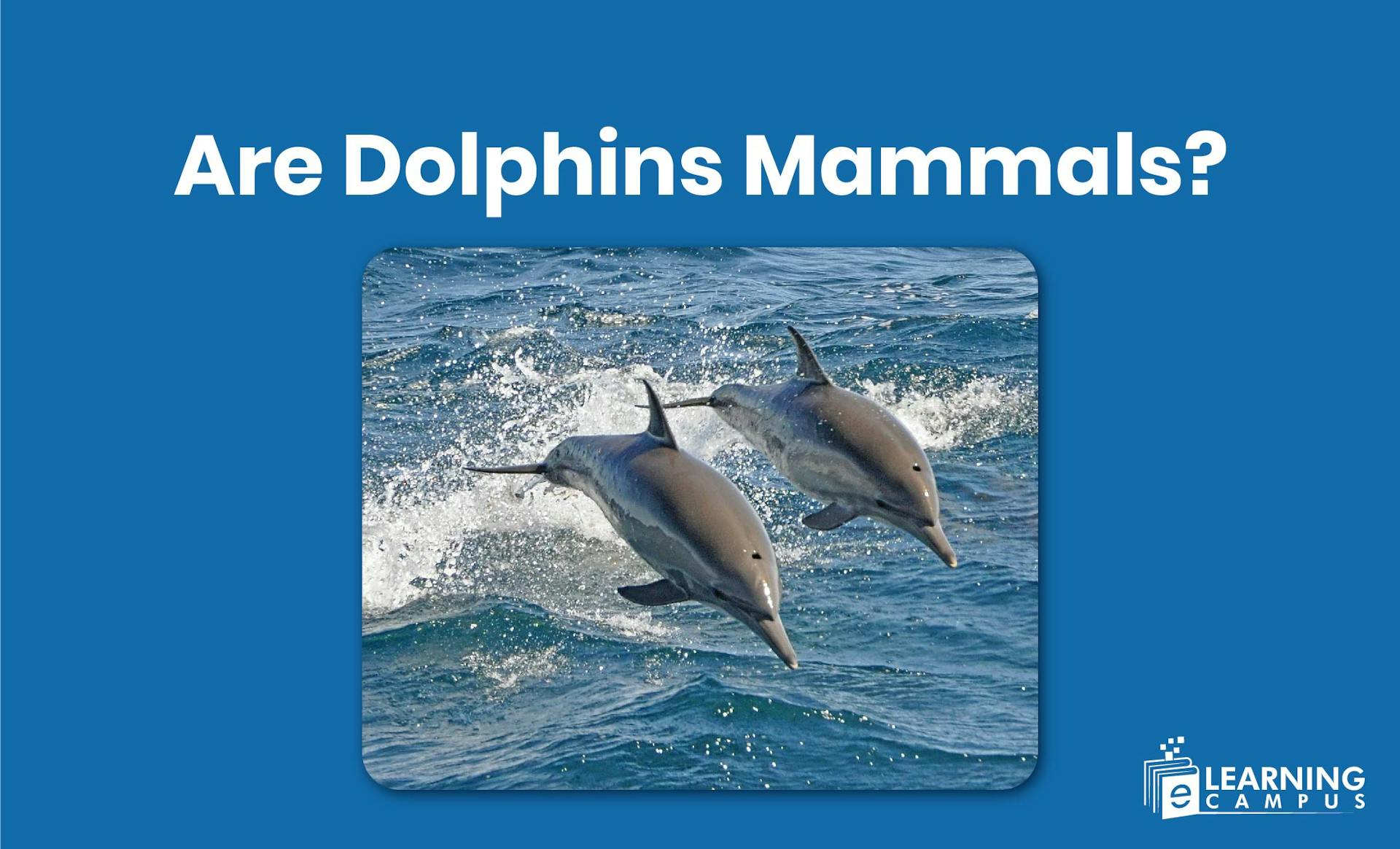
What comes to your mind when you hear about dolphins? Fish or Mammals? You are probably thinking dolphins are fish. But dolphins are not fish; they are mammals and belong to the kingdom Animalia.
This question of dolphins being mammals ranks among the most common misconceptions in marine biology.
In this blog, you will learn why are dolphins mammals, classification, biology, and evolutionary history.
Are Dolphins Mammals
Yes, dolphins are mammals. They are considered marine mammals. They live their entire lives in water. Dolphins belong to the class Mammalia and the order Cetacea, which also includes whales and porpoises. This classification places them alongside land mammals like dogs, cats, and humans rather than fish like sharks or mahi-mahi.
When we see dolphins swimming gracefully through the ocean, their fish-like appearance can be deceiving. However, dolphin biology is fundamentally different from fish anatomy in nearly every significant way.
Are Dolphins Fish or Mammals
Dolphins are mammals, not fish. Although they live in the ocean, but they share the same biological characteristics as land mammals like humans, rather than the respiratory and reproductive systems of fish.
The scientific consensus is that dolphins are not fish but mammals. Every aspect of dolphin mammal biology confirms this:
- Respiratory system: Lungs, not gills
- Circulatory system: Four-chambered heart, like mammals, not two-chambered like fish
- Reproductive system: Live birth and nursing, not egg-laying
- Thermoregulation: Warm-blooded, not cold-blooded
- Skeletal structure: Mammalian bone structure in fins
- Nervous system: Highly developed mammalian brain
Why Are Dolphins Mammals? The Scientific Explanation
Dolphins are categorized as mammals. Mammals are warm-blooded vertebrate animals characterized by having hair or fur, feeding their young milk from mammary glands, breathing air with lungs, having a more complex brain, and typically giving birth to live young.
Here are the traits that make dolphins mammals and distinguish them from fish. These characteristics are rooted in evolutionary biology and provide clear proof of dolphins as mammals.
Warm Blooded Physiology
One of the most important dolphin mammal facts is that they are warm-blooded animals. Unlike fish, which are cold-blooded and rely on their environment to regulate body temperature. Dolphins maintain a constant internal temperature of around 98.6°F (37°C), remarkably similar to humans.
This warm-bloodedness is a defining mammal trait.
It allows dolphins to thrive in various ocean temperatures, from tropical waters to cooler seas. Their thick layer of blubber (fat) provides insulation, helping maintain this stable body temperature even in cold water.
Live Birth and Nursing Calves
The most compelling dolphins' mammal status comes from their reproductive biology. Dolphins give live birth to their young, rather than laying eggs like most fish. A mother dolphin typically gives birth to a single calf after a gestation period of 10-17 months, depending on the species.
After birth, the mother nurses her calf with milk produced by the mammary glands, which is a mammal characteristic. This milk production and nursing period, which can last 18 months to several years, provides essential nutrition and antibodies. This relationship between mother and offspring is similar to that of terrestrial mammals.
Blowhole Respiration
Dolphins breathe air through lungs, not water through gills. This is one of the most visible differences between dolphins and fish. The blowhole on top of a dolphin's head is actually a modified nostril, allowing them to breathe while minimizing their time at the surface.
Dolphins must consciously surface to breathe, typically every few minutes. Some species can hold their breath for up to 15 minutes. This blowhole respiration system is a clear dolphin mammal feature that distinguishes them from gill-breathing animals like fish.
Hair Follicles
Dolphins have hair. But most species only display it during fetal development and shortly after birth. Bottlenose dolphins have whisker-like hairs on their rostrum (snout) when they are born. The presence of hair follicles, even if minimal, is another mammal trait inherited from their terrestrial ancestors.
Dolphin vs Fish - Understanding the Differences
The dolphin fish confusion is common. They are commonly considered as one group. But examining the dolphin vs fish differences reveals two completely distinct animal groups that evolved along separate paths millions of years ago.
Here are some anatomical differences between dolphins and fish.
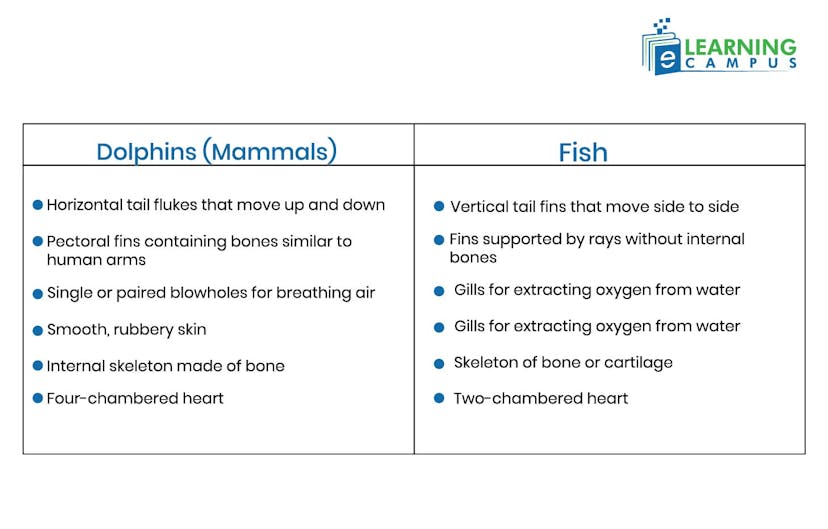
Dolphins (Mammals)
- Horizontal tail flukes that move up and down
- Pectoral fins containing bones similar to human arms
- Single or paired blowholes for breathing air
- Smooth, rubbery skin
- Internal skeleton made of bone
- Four-chambered heart
Fish:
- Vertical tail fins that move side to side
- Fins supported by rays without internal bones
- Gills for extracting oxygen from water
- Scales covering the body
- Skeleton of bone or cartilage
- Two-chambered heart
What Makes a Dolphin a Mammal? The Key Features
Despite their aquatic lifestyle and fish-like appearance, dolphins possess all the defining characteristics of mammals. These fundamental traits are rooted in their evolutionary history as descendants of land-dwelling mammals that returned to the ocean millions of years ago. We will explore the specific features that classify dolphins as mammals rather than fish.
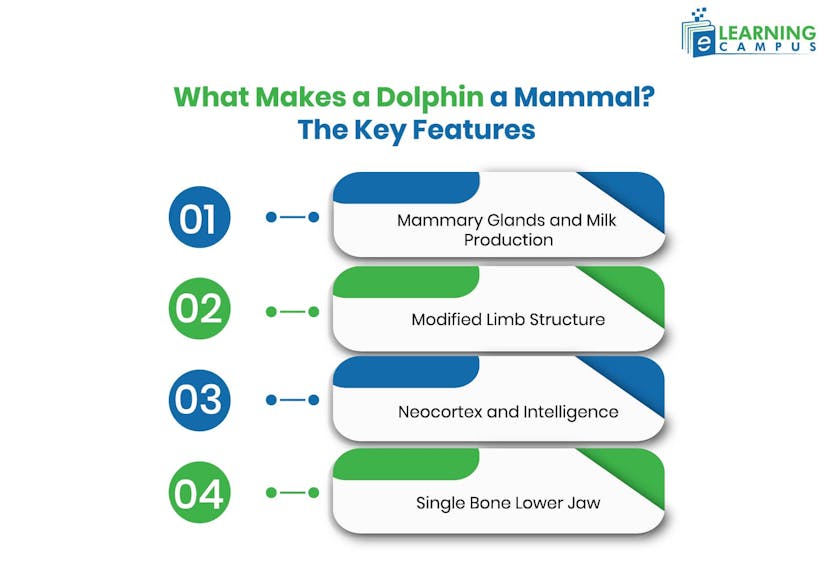
Mammary Glands and Milk Production
The word “mammal” derives from the Latin “mamma,” meaning breast. All mammals produce milk to nourish their young, and dolphins are no exception. A female dolphin's mammary glands are located on either side of her genital slit, and she actively nurses her calf by squirting milk into its mouth.
Modified Limb Structure
Dolphin skeleton bones are remarkably similar to those in human arms and hands. Inside a dolphin's pectoral fins are the same basic bones, humerus, radius, ulna, carpals, metacarpals, and phalanges, found in terrestrial mammals. This shared anatomy provides powerful proof of their evolutionary connection to land mammals.
Neocortex and Intelligence
Dolphins possess a highly developed neocortex, the part of the brain associated with higher-order thinking, problem-solving, and social behavior. This advanced brain structure is characteristic of mammals and contributes to the remarkable intelligence dolphins display, including self-awareness, complex social structures, and sophisticated communication.
Single Bone Lower Jaw
Unlike fish, which have multiple bones in their lower jaw, dolphins have a single bone on each side, another trait shared with all mammals.
Taxonomical Classification of Dolphin
Living things are classified based on their characteristic. It is known as the classification of living things. Understanding dolphin mammal classification helps clarify their place in the animal kingdom:
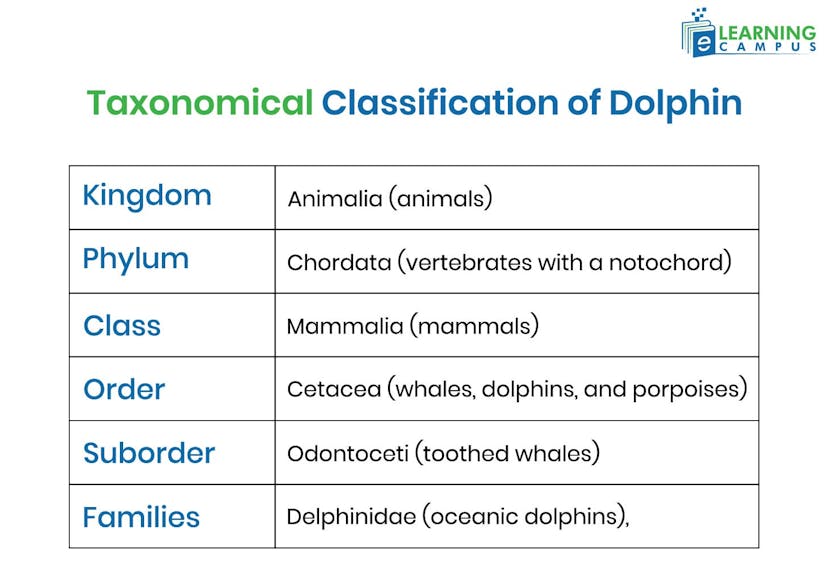
- Kingdom: Animalia (animals)
- Phylum: Chordata (vertebrates with a notochord)
- Class: Mammalia (mammals)
- Order: Cetacea (whales, dolphins, and porpoises)
- Suborder: Odontoceti (toothed whales)
- Families: Delphinidae (oceanic dolphins), Platanistidae (river dolphins), and others
This taxonomy places dolphins squarely within the mammal group. The order Cetacea includes all whale and dolphin species, with dolphins typically being smaller cetaceans with conical teeth (unlike baleen whales).
Common Dolphin Species
Dolphins have several species. Each of these species shares the fundamental traits that define them as mammals rather than fish. Different dolphin mammal examples include:
- Bottlenose dolphin (Tursiops truncatus): Perhaps the most recognizable species, commonly seen in aquariums and marine parks
- Orca (Orcinus orca): Also known as killer whales, these are actually the largest dolphin species
- Common dolphin (Delphinus delphis): Known for their distinctive hourglass pattern
- Spinner dolphin (Stenella longirostris): Famous for their acrobatic spinning jumps
- River dolphins: Several species living in freshwater rivers in Asia and South America
Common Confusion Between Dolphins and Fish
Dolphins and fish are usually confused. The myth persists for several understandable reasons. But it is scientifically incorrect. We will look at some common misconceptions:
"Dolphins Live in Water, So They Must Be Fish"
This is the most common dolphin fish misconception. While habitat influences appearance through convergent evolution, it does not determine classification. Many aquatic mammals exist, including seals, sea lions, walruses, otters, and manatees.
Being aquatic does not make an animal a fish any more than living on land makes an animal a mammal; birds and reptiles also live on land.
"Dolphins Look Like Fish"
Dolphins have evolved a streamlined, torpedo-shaped body similar to fish through convergent evolution. However, their internal anatomy, physiology, and reproduction remain distinctly mammalian.
The Mahi-Mahi Confusion
Adding to the dolphin fish confusion is the existence of a fish called "dolphinfish" or mahi-mahi (Coryphaena hippurus). This is a true fish with gills and scales, completely unrelated to dolphins despite sharing a common name. This dolphin fish vs mahi-mahi distinction is important. One is a mammal, the other is in the fish (Pisces) classification.
Dolphins Part of a Larger Marine Mammal Group
Dolphins are not alone in their dolphin mammal group. The broader category of marine mammals includes several distinct orders. These marine mammal species share common ancestry with land mammals and retain the defining characteristics of Mammalia despite their adaptation to aquatic life.
Cetaceans (Order Cetacea)
- All dolphins and porpoises
- Baleen whales (blue whales, humpback whales)
- Toothed whales (sperm whales, beaked whales)
Other Marine Mammals
- Pinnipeds: Seals, sea lions, and walruses
- Sirenians: Manatees and dugongs
- Marine fissipeds: Sea otters and polar bears
The Evolution of Dolphins: How They Became Aquatic Mammals
The dolphin mammal science behind cetacean evolution is fascinating. Fossil evidence traces dolphins back to land-dwelling ancestors.
Cetacean Evolution
The Cetacean evolution explains the evolutionary divergence of dolphins. It tells around 50 million years ago, the ancestors of modern cetaceans were land-dwelling mammals (four-legged) that gradually adapted to aquatic life. Fossil evidence shows these evolutionary traits developing over millions of years.
This evolutionary history explains why dolphins retain key mammalian characteristics despite their fish-like appearance. This phenomenon is called convergent evolution, where unrelated animals develop similar features in response to similar environmental pressures.
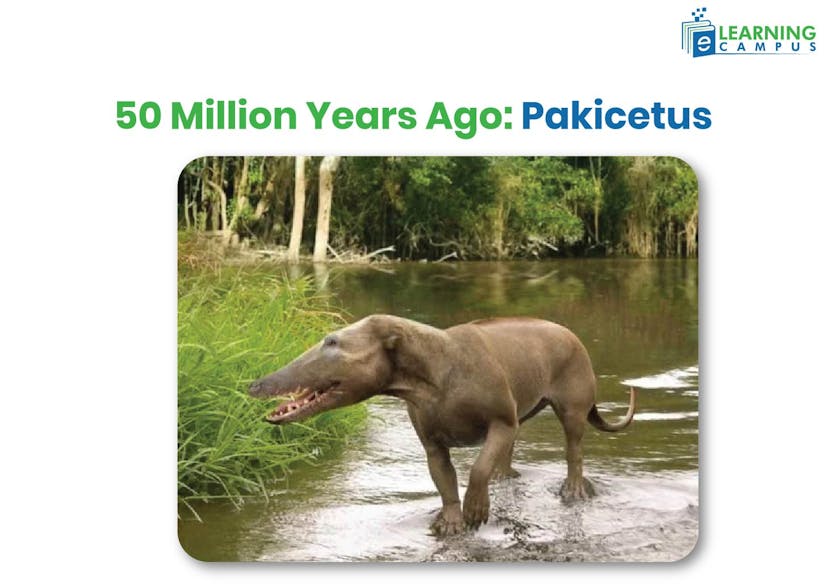
50 Million Years Ago: Pakicetus
Pakicetus is considered one of the earliest ancestors of modern whales, dolphins, and porpoises. It was a wolf-sized mammal living near water in Pakistan. They had four legs and spent time both on land and in water. It was a carnivore that preyed on small land animals and fish, using ambush tactics in shallow waters.
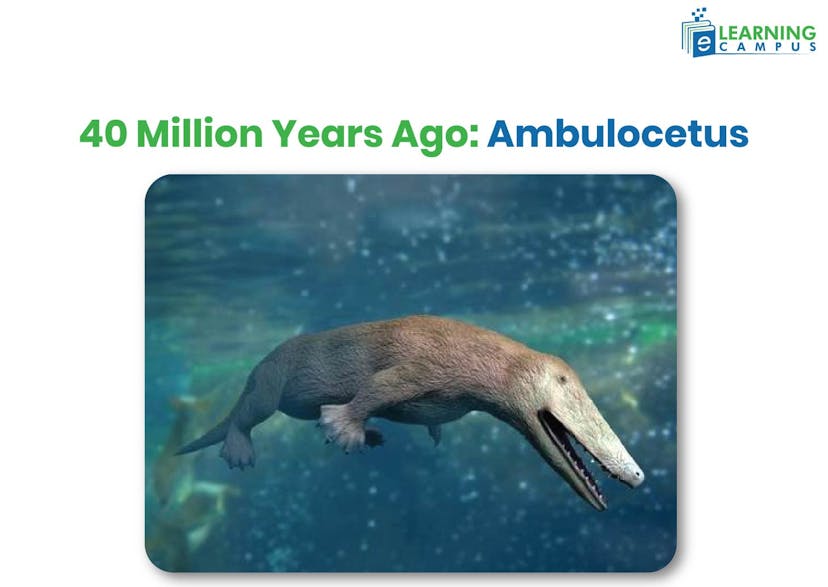
40 Million Years Ago: Ambulocetus
Ambulocetus (walking whale) is a genus of early amphibious cetaceans that lived during the Early Eocene epoch. They were more adapted to water but still had functioning legs. They likely hunted in shallow waters. Measuring about 10–12 feet long, their four limbs were suitable for walking on land and large feet for swimming. It provides key evidence of the evolution of whales from land mammals.
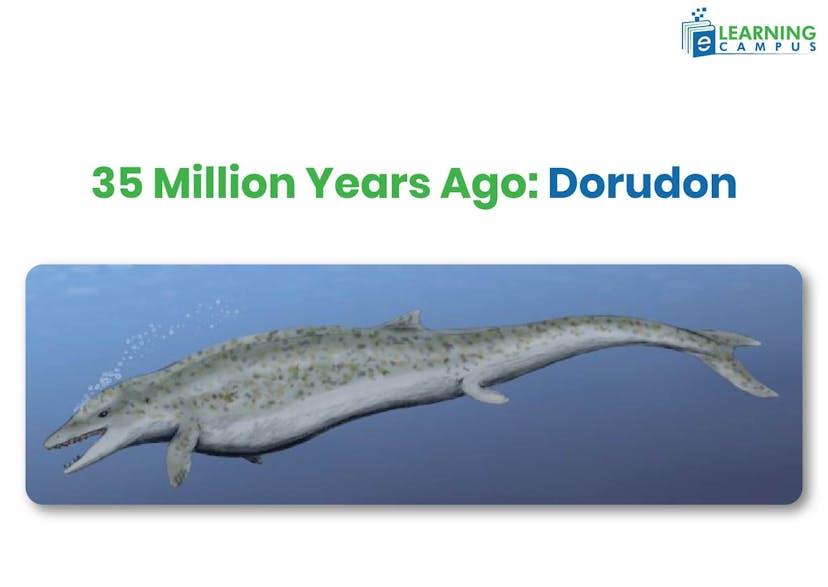
35 Million Years Ago: Dorudon
By this point, hind limbs had become vestigial, and these mammals were fully aquatic. Modern dolphins still have tiny pelvic bone remnants, evidence of their legged ancestors.
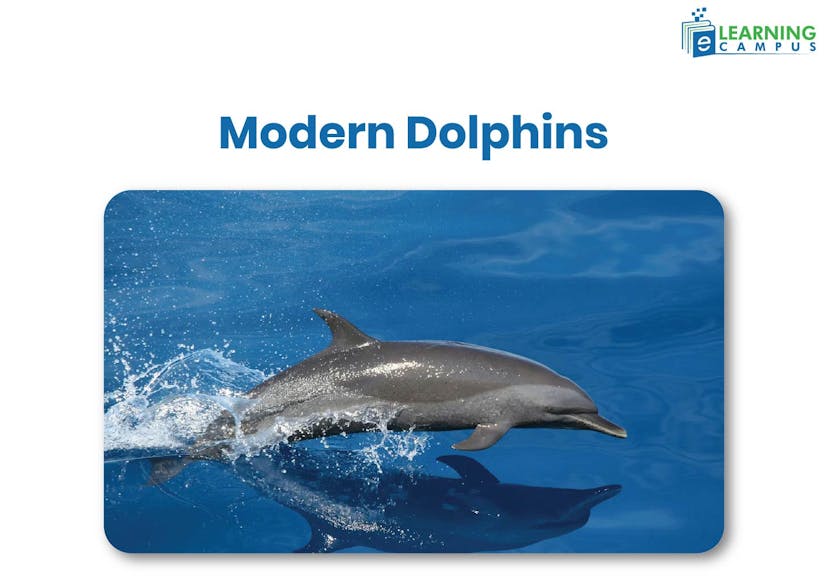
Modern Dolphins
Today's dolphins represent millions of years of evolutionary refinement for oceanic life while maintaining their mammalian heritage. These evolutionary traits demonstrate that dolphins are mammals that returned to the sea, not fish that developed mammalian characteristics.
Dolphin Mammal Physiology: How They Thrive in Ocean Ecosystems
Dolphins are marine mammals physiologically adapted to aquatic life through warm-blooded metabolism, air-breathing via a blowhole, and streamlined bodies with blubber for insulation. They possess specialized respiratory systems for diving, high oxygen storage in muscles, and a reduced heart rate during deep, prolonged submersion.
Oxygen Efficiency
Dolphins have adapted to maximize oxygen use. They can exchange up to 80% of the air in their lungs with each breath (humans exchange only about 17%). Their blood has a high concentration of hemoglobin, allowing them to store more oxygen, and their muscles contain high levels of myoglobin, which stores oxygen in muscle tissue.
Diving Adaptations
When diving, dolphins experience bradycardia. Their heart rate slows dramatically to conserve oxygen. Blood flow is redirected to essential organs like the brain and heart, away from less critical areas. These features allow deep dives while maintaining their warm-blooded metabolism.
Echolocation
Most toothed cetaceans, including dolphins, use echolocation to navigate and hunt. They produce clicks that bounce off objects, creating a detailed acoustic picture of their environment. This sophisticated biological sonar is unique to cetaceans and a few other mammal groups like bats.
Social Structures
Dolphins live in complex social groups called pods, displaying behavior typical of intelligent mammals. They cooperate in hunting, protect injured pod members, and even appear to grieve their dead. This social complexity is a hallmark of marine mammal species with advanced cognitive abilities.
Dolphin vs Amphibian
Some people wonder if dolphins might be amphibians rather than fish. The answer is still no. While amphibians like frogs and salamanders do share some characteristics with mammals, both are vertebrates with four-chambered hearts; dolphins lack key amphibian traits:
- Amphibians have moist, permeable skin, while dolphins have thick, rubbery skin
- Amphibians undergo metamorphosis, and dolphins are born as miniature adults
- Most amphibians lay eggs, but dolphins give live birth
- Amphibians can absorb oxygen through their skin, but dolphins breathe only through their lungs.
Conclusion
The scientific evidences show that dolphins are mammals. From their warm-blooded physiology to their nursing of calves, from their air-breathing lungs to their complex mammalian brains, every aspect of dolphin biology confirms their place in the class Mammalia. They live in the water and look like fish, but they do not belong to the class of fish.
Excel in Science With Our Tutors
Are you struggling with your science lessons? We can help you. We have professional online science tutors with years of experience in teaching students. You will get personalized instruction with targeted exam preparation.