Loading...
elearning Campus Blog African Mammals with Striped Legs
African Mammals with Striped Legs
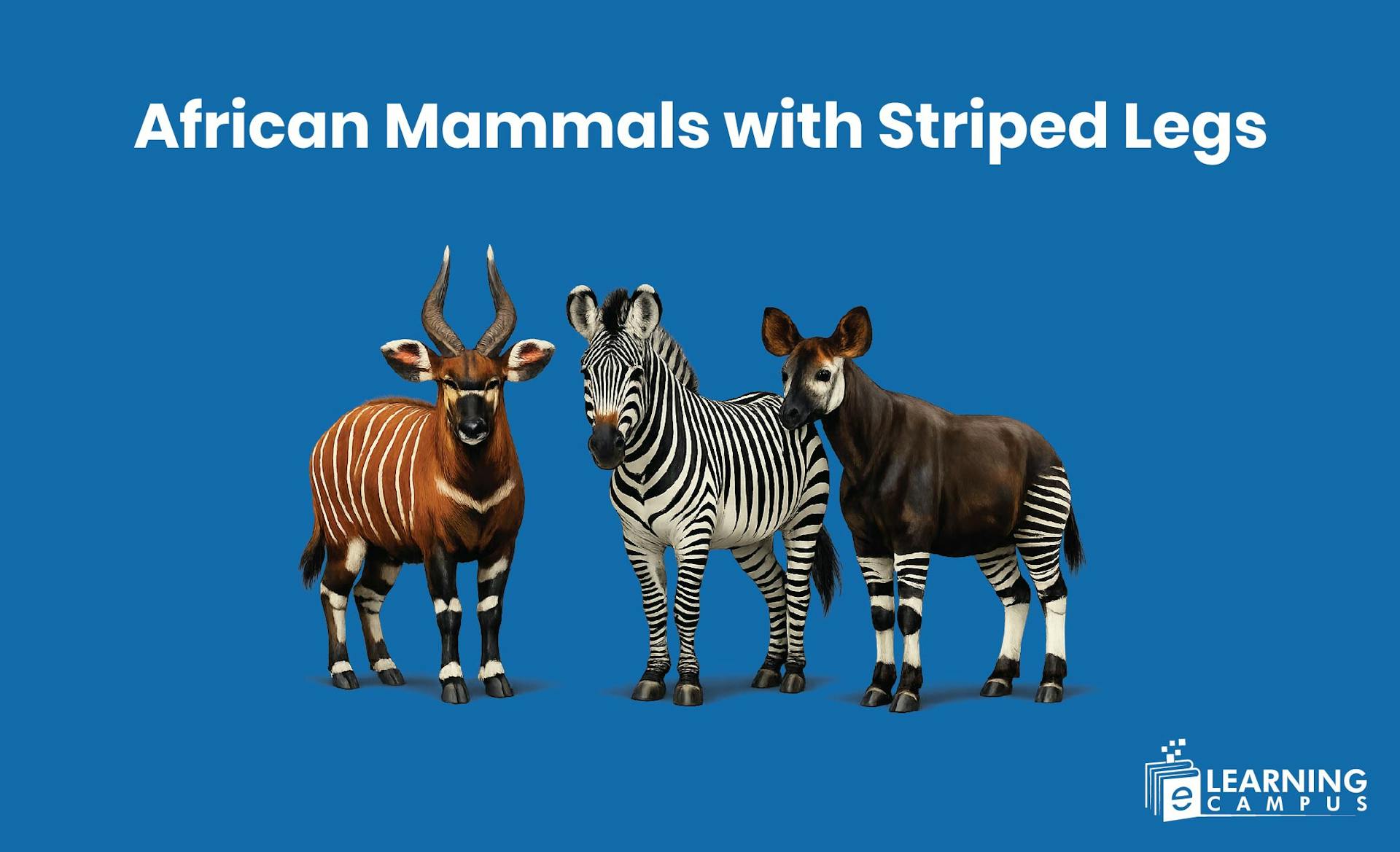
Have you heard about some unique African mammals known for their striking features? These are called African mammals with striped legs, such as the okapi. Other mammals such as zebras, Bongos, African wild dog, Grant’s gazelle, etc, have stripes on their bodies. All of these have unique patterns and their own identification.
These bold patterns are not just beautiful to look at; they also tell fascinating stories about survival, evolution, or adaptation.
In this blog, we explore some of the most iconic African mammals with striped legs or stripes on their bodies, their adaptations, and how they use stripes for camouflage, communication, and temperature control.
What are African Mammals with Striped Legs?
African mammals with striped legs are species that display distinctive stripes or patterns on their limbs, usually serving as camouflage, communication predator deterrence. These stripes are especially common in herbivores and some predators that live in savannas, grassland, and forests.
Famous African Mammals with Striped Legs
Famous African mammals with striped legs include zebras, okapi, bongos, African wild dog, and Grant’s gazelle, etc. Here are the details;
Zebra
One of the most iconic African mammals with stripes is the zebra. Zebras are also known worldwide for their bold black and white patterns, which cover their entire bodies, including legs.
Purpose of stripes:
- Camouflage against predators in tall grass.
- Confuse predators when zebras move in a herd.
- Help regulate body temperature.
Habitat:
- Grassland and savannas of eastern and southern Africa.

Okapi
Another remarkable mammal with striped legs is the okapi, a shy, elusive forest dweller from the democratic Republic of Congo. They are closely related to giraffes; okapis are much smaller and have dark brown bodies contrasted by striking white horizontal stripes on their legs.
- Young okapis use these stripes to recognize and follow their mothers through the forest.
- With long, velvety, dark fur and an incredibly long tongue that can even be used to clean their own eyelids.
- These stripes provide excellent camouflage in the dense rainforest, helping them to avoid predators.
Purpose of stripes:
- Provides camouflage in dense forests.
- Allows mother and calf to recognize each other.
Habitat
- Rainforest of the democratic republic of congo.

Bongo
Bongo is a large,forest-dwelling antelope found in central and western Africa. It has a reddish brown coat with thin white stripes running vertically along its body and legs, which help it to camouflage in dense forests. Both males and females have long, spiraled horns that aid in moving through thick vegetation. Bongos are shy, mostly nocturnal, and feed on leaves, bushes, and fruits.
Purpose of stripes
- Camouflage from predators and recognition within the group.
Habitat
- Dense, shady forest of central and west Africa

The African wild Dog
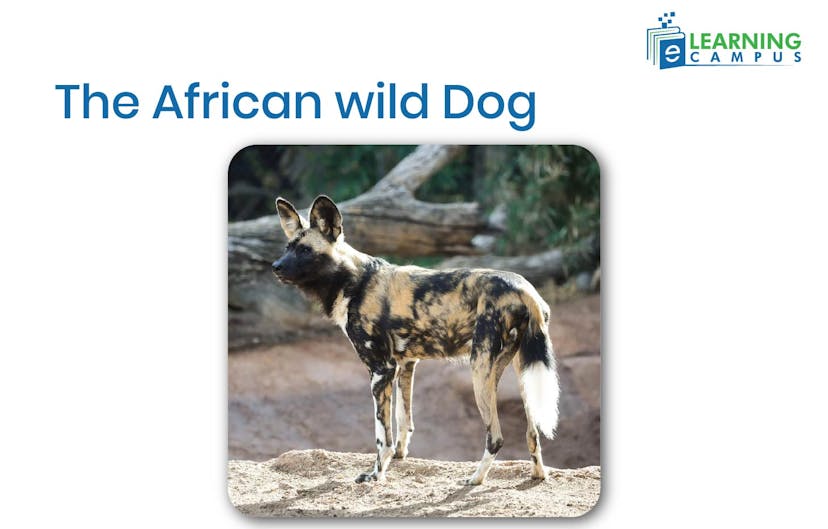
The African wild dog is also called the painted dog, is another mammal with distinctive markings that include leg stripes. Each African wild dog has a unique coat pattern, consisting of patches of black, brown, white, and yellow with irregular markings on their legs.
Purpose of strips:
- Provide camouflage while hunting
- Each dog has a unique pattern for identification within the pack
Habitat:
- Savannas, grassland, and woodland.
Grant’s Gazelle
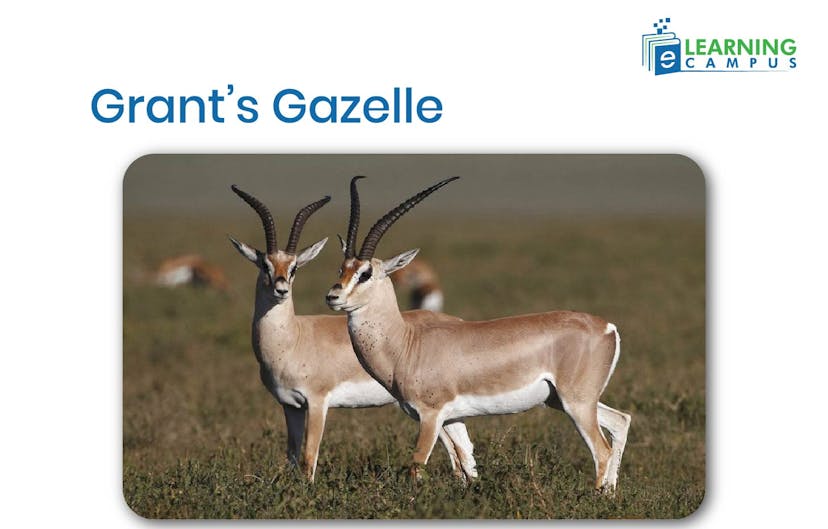
Some antelope species, such as Grant’s gazelle and other forest and savanna antelopes, also have stripes or distinct markings on their legs. Leg stripes help these antelopes remain inconspicuous to predators in tall grasslands, and they can create a visual effect that makes it harder for predators in tall grassland to recognize them.
Purpose of stripes
- The light-dark contrast used for camouflage
- For the recognition of each other
- The white rum patch is visible when they run, helping herd members to stay together.
Ardwolf
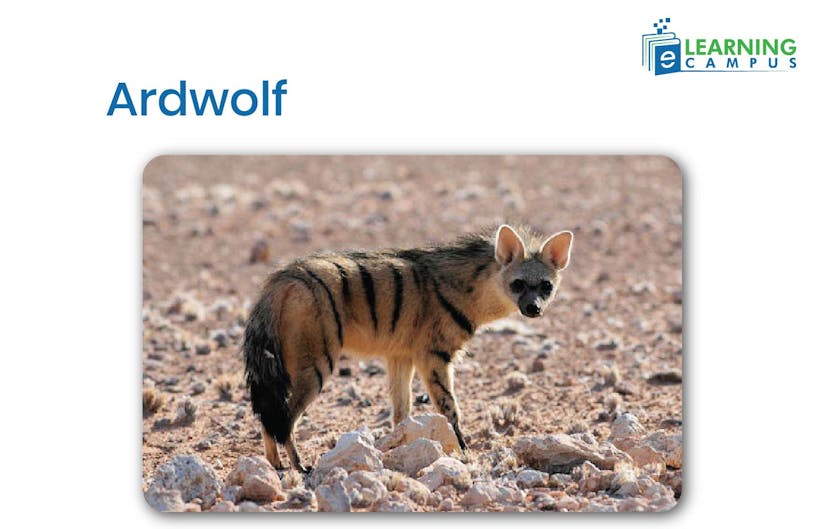
The Ardwolf is a mammal found in eastern and southern Africa. It belongs to the hyena family but eats mainly termites,n ot meat
It is nocturnal and lives in savanna grassland and open plains.
Purpose of stripes
- The dark stripes serve a camouflage, helping it to blend with tall grass
Habitat
- Eastern and southern Africa
- Dry grassland, savannas, and scrub areas
Ring-Tailed Lemur
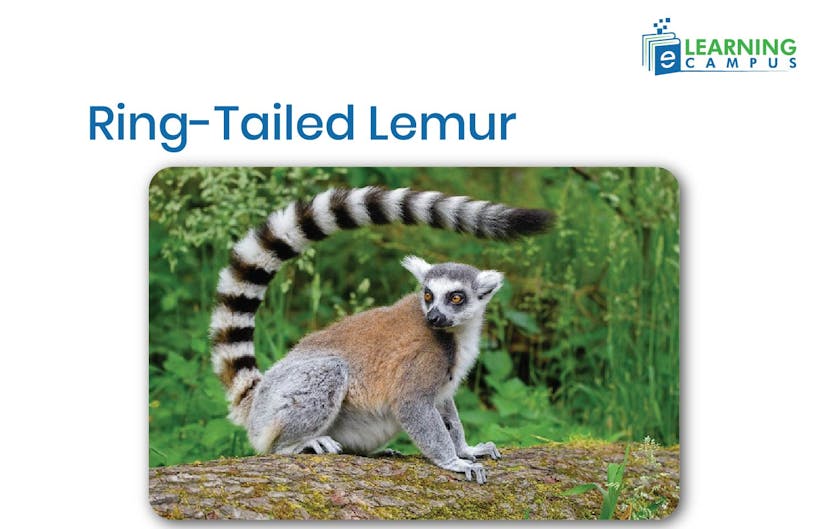
The ring-tailed lemur is a primate found only in Madagascar. It is known for its long tail with black and white rings. They are social animals that live in groups and spend time both on the ground and in trees.
Purpose of stripes
- The stripes' tail is used for communication and recognition in a group
- During a stink fight, they raise their tails to spread scent for dominance.
Habitat
- Southern Madagascar
- Dry forests, scrublands, and rocky areas
Why do these Animals have striped legs?
Stripes may look beautiful, but in nature, beauty usually has a purpose. Striped legs offer survival benefits to African mammals such as camouflage, communication and recognition, predator confusion, and temperature control. Here are the details;
Camouflage
One of the most important reasons is camouflage. In the forest, stripes break up the shape of the body, blending it with sunlight and shadows. This makes it harder for predators to detect them.
Communication and Recognition
Stripes can help with communication and recognition. Young animals such as okapi, calves, or zebra foals rely on their mother’s unique pattern to stay close.
Predator Confusion
Another advantage is that stripless animals move together; the patterns seem to merge, making it difficult for predators to track one individual.
Temperature Control
Some scientists believe that these stripes may play a role in temperature control or insect protection, especially in zebras' ability to stay cool because black stripes absorb heat while white stripes reflect it. This creates tiny temperature differences in the skin. Warm air rises over black stripes and cooler air sinks over white ones, making small air currents that act like a cooling system, which helps these animals to stay cool in hot African weather.
Conclusions
African mammals like zebras, okapis, and African wild dogs have stripes on their bodies. Each animal has a distinct species that makes them beautiful in their own way. These stripes help animals to distinguish themselves from predators, communicate, and control body temperature. Protecting these animals and their habitats is crucial to preserving Africa’s incredible biodiversity.
Learn science online with Expert Tutors
Are you struggling with science subjects? We can help you. Our online science tutors guide you in learning. You will get one-on-one online tutoring for science lessons and exam preparations. Get benefits with our online tutoring service and boost your knowledge and grades in Science now!
