Square Root of -4

Have you ever wondered what happens when we try to take the square root of negative numbers, such as √-4. The square root of negative numbers is not possible. To solve this type of problem, we need a special number called i the imaginary unit.
In this blog, we will explore how to handle square roots of negative numbers, fractions, or decimals step by step in detail.
Square Root of -4
To find the square root of -4, which is negative, we need an imaginary number. Let’s solve the square root of -4 with proper steps.
Step 01:
In real numbers, a square root of a negative number does not exist. So no real number squared gives −4. The square root of −4 is ±2i, where i represents the imaginary unit.
Step 02:
In complex numbers, we use;
i = √−1
Rewrite −4 as:
−4 = 4(−1)
Step 03:
Apply square root rules and simplify.
√−4 = √(4(−1))
Step 04:
Find the square root of 4 and put the value of i = √−1
√−4 = √4 × √(−1) = 2i = ±2i
So, −4 = ±2i
Square Root of 1/4
The square root of -4 does not exist in the real number system because no real number multiplied by itself gives a negative result.
However, in complex numbers, the square root of -4 step by step:
Step 01: Write the Expression
√(1/4)
Step 02: Apply the Square root to the Numerator and Denominator
√(1/4) = √1 / √4 (splitting the fraction)
Step 03: Find the square root and simplify it
√1 / √4 = 1 / 2

So the square root of 1/4 = 1/2
Square Root of 4/3
To find the square root of 4/3, first, apply the square root to the denominator and numerator, rationalize it, and simplify the values. Here are the steps:
Step 01: Write the Expression
√(4/3)
Step 02: Apply the square root to the numerator and denominator
√(4/3) = √4 / √3
Step 03: Find the square root and simplify it
√4 / √3 = 2 / √3
Step 04: Rationalize the denominator
To remove the square root from the denominator, multiply the numerator and denominator by √3:
(2 / √3) × (√3 / √3) = 2√3 / 3
Step 05: Multiply the values and simplify them
2√3 / 3
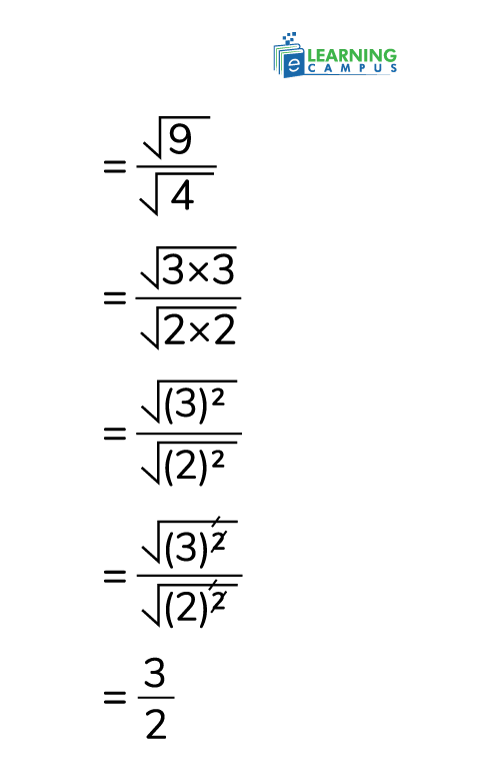
So, the square root of 9/4 = 3/2, also a rational number.
What is the Square Root of 2/4
If you want to find the square root of 2/4, then you need to write it as an expression. Apply the square root to the numerator and denominator, and simplify the values.
Step 01: Write the Expression
√(2/4)
Step 02: Apply the square root to the numerator and denominator
√(2/4) = √2 / √4
So, the square root of 2/4 is √2 / 2
What is the Square Root of 4
The square root of a number is a value that, when multiplied by itself, gives the original number. The square root of 4 is 2, which is a rational number because it can be written as a fraction.
Step-by-step calculations:
√4
Step 01: Find the factors of 4
2 × 2 = 4
Step 02: Cut the square root of 2
(√2)² = 2
So, the square root of 4 is 2.
Square Root of 4.5
If you want to find the square root of 4.5, then you need to write it as a fraction. Apply the square root to the numerator and denominator, rationalize it, and simplify the values.
Step 01: First, write 4.5 as a fraction
4.5 = 9/2
Step 02: The square root of a fraction is the square root of the numerator divided by the square root of the denominator
√4.5 = √(9/2) = √9 / √2
Step 03: Simplify 9
3 / √2
Step 04: Rationalize the Denominator
(3 / √2) × (√2 / √2) = 3√2 / 2
The square root of 4.5 is 3√2 / 2. Since √2 is irrational, 4.5 is irrational.
What is 4 times the Square Root of 3
If you want to find 4√3, find the square root of 3, then multiply the value by 4.
Step 01: Write the expression
4√3
Step 02: Find the square root of 3
√3 is irrational, approximate value: √3 ≈ 1.732
Step 03: Multiply 4 by 1.732
4 × 1.732 = 6.928
So, 4√3 ≈ 6.928
What is 4 times the Square Root of 5
Step 01: Write the expression
4√5
Step 02: Find the square root of 5
√5 is irrational, approximate value: √5 ≈ 2.236
Step 03: Multiply 4 by 2.236
4 × 2.236 = 8.944
So, 4√5 ≈ 8.944
What is 4 times the Square Root of 81
Step 01: Write the expression
4√81
Step 02: Find the square root of 81
√81 = 9
Step 03: Multiply 4 by 9
4 × 9 = 36
So, 4√81 = 36, which is also a rational number.
What is the Square Root of 0.4
Step 01: Convert 0.4 into a fraction
0.4 = 4/10 = 2/5
Step 02: Apply the square root to the fraction
√(2/5) = √2 / √5
Both √2 and √5 are irrational, so 0.4 is also irrational.
Square Root of 3.4
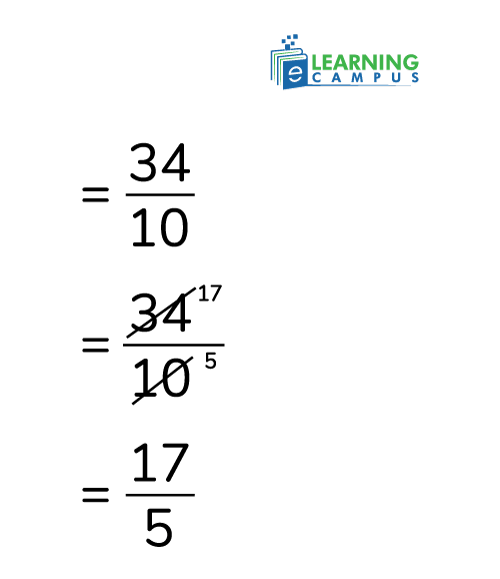
Step 01: Write 3.4 as a fraction
3.4 = 34/10 = 17/5
Step 02: The square root of a fraction is the square root of the numerator divided by the square root of the denominator
√(17/5) = √17 / √5
Step 03: Rationalize the Denominator
(√17 / √5) × (√5 / √5) = √85 / 5
Step 04: Optional Decimal approximation
√85 / 5 ≈ 9.220 / 5 ≈ 1.844
The square root of 3.4 is √85 / 5 ≈ 1.844. Since √85 is irrational, 3.4 is irrational.
What is the Square Root of 4 multiplied by 16
To find the square root of 4 multiplied by 16, first, multiply the values under the square root, then find the square root of the value. Here are the steps:
Step 01: Multiply values under the square root
4 × 16 = 64
So,
= 64
Step 02: Find the square root
As we know, 8 is the perfect square root of 64.
√64 = 8
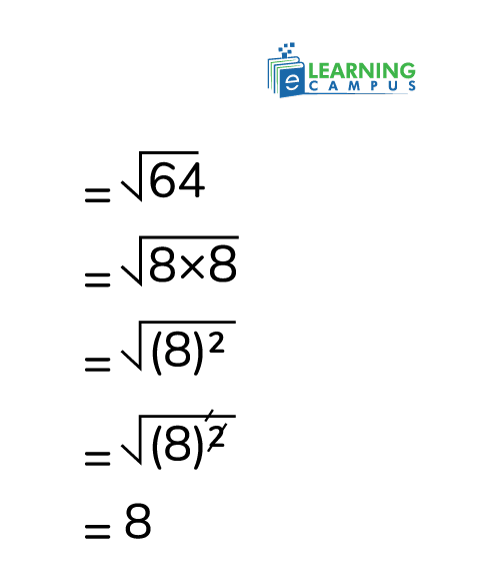
So, the square root of 4 multiplied by 16 is 8
Conclusions
The square root of a negative number might seem tricky at first, but with the imaginary unit (i) they become simple to handle. Remember,
√(-a) = √a · i, where a > 0
Understanding this concept is a key step in learning advanced mathematics and real-world applications.
Learn Math online with expert Tutors
Want to master more fun and interesting math concepts like imaginary numbers, square roots, and factorization? Our expert online math tutors can help you cover key topics. They will help with your homework, preparation for exams, and build basic math concepts. Get benefits with our online tutoring service now.