Loading...
elearning Campus BlogComparing Fractions
Comparing Fractions
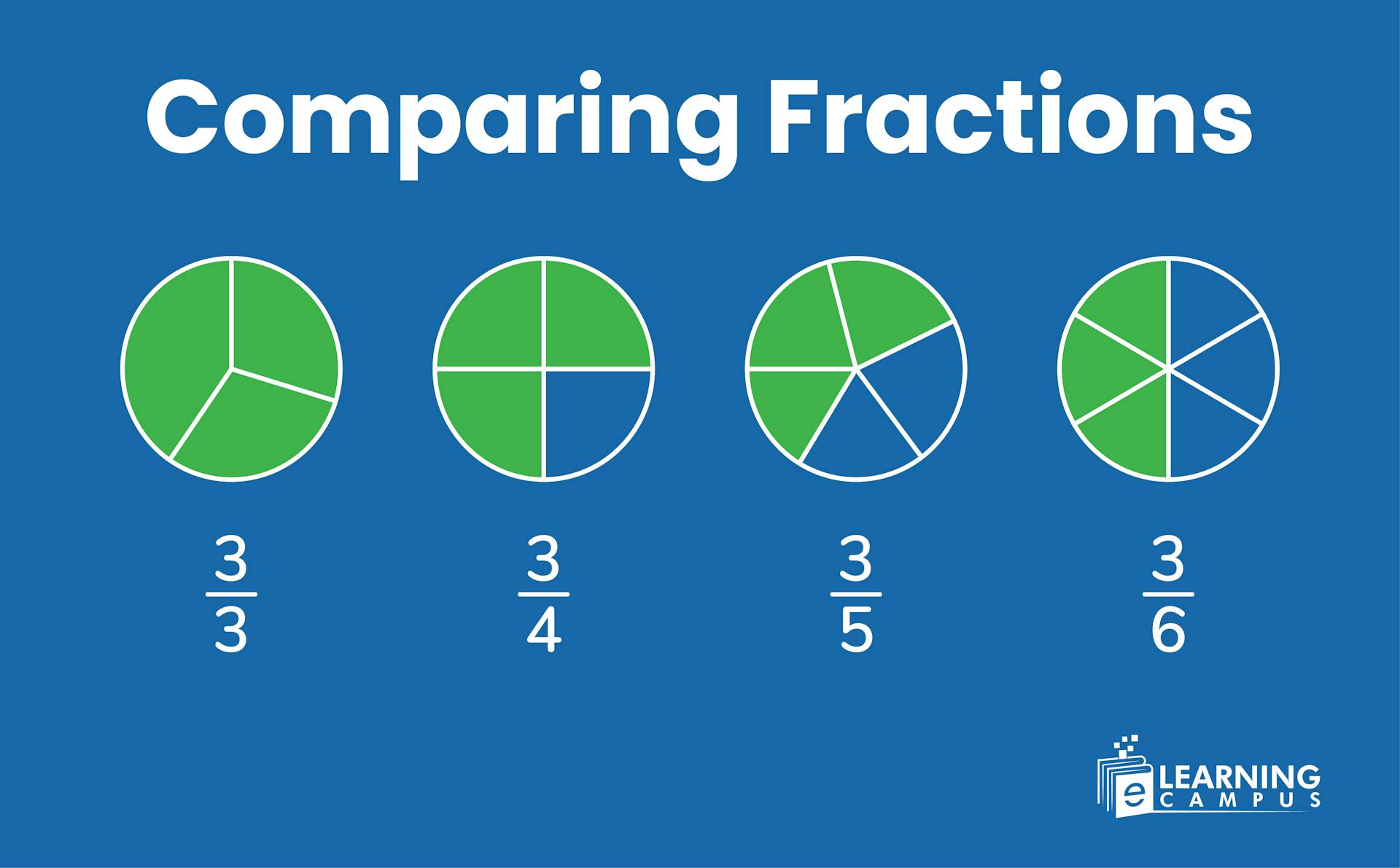
Comparing fractions is a process of comparing two or more fractions. It determines which fraction is larger and which is smaller. To compare fractions, we either need to convert them to equivalent fractions or use cross-multiplication to compare the fractions directly.
How to Compare Fractions
There are several ways to compare fractions. It follows certain sets of rules related to the numerators and denominators that make comparison easy. The two common methods for fraction comparison are the decimal method and the same denominator method.
We will learn different methods of fraction comparison in detail.
Decimal Method of Comparing Fractions
In the decimal method of comparing fractions, we convert fractions into their decimal equivalents and then compare the decimal values. The fraction with the larger decimal value is considered the larger fraction.
Example
Which one of the following fractions is bigger?
First, we will convert the fraction into a decimal value by dividing the numbers.
Now, compare the decimal value.
0.5 is greater than 0.416.
So, the fraction 3/6 is greater than
It can also be expressed as
Comparing Fractions With Same Denominator
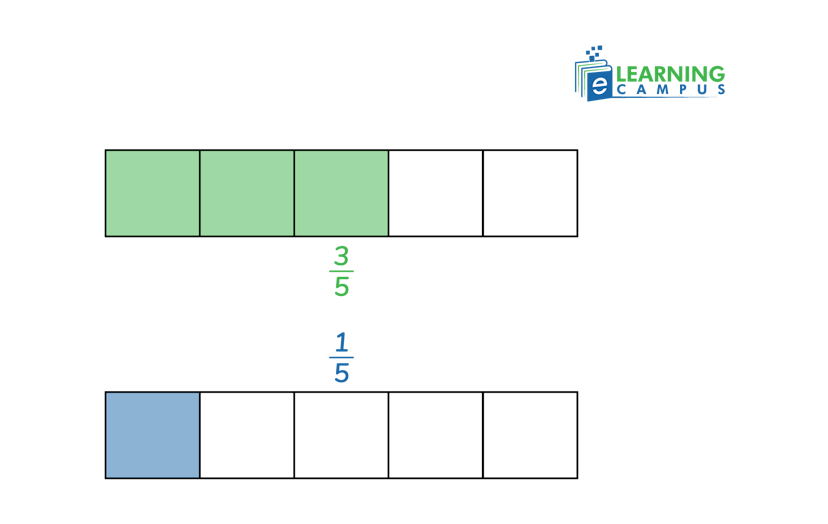
One of the methods of fraction comparison is comparing fractions with same denominator. To compare fractions with like denominators, we just look at the numerators of the fractions. The fraction with the greater numerator is greater.
Example
Compare Fractions With Unlike Denominators
To compare fractions with unlike denominators, we first need to make the denominators the same. Once the denominators become the same, it becomes easy to compare them.
Let’s look at the example.
Compare
- Observe the denominators. They are different. So, we will make them the same by finding LCM (the lowest common multiple).
LCM(3, 5) = 15
- Now multiply the 1st fraction by 55, that is,
- Also, multiply the second fraction fraction with 33.
- Now compare the fractions
- The fraction with a larger numerator is bigger.
Compare Fractions With the Same Numerator
We can compare fractions with the same numerators. In this method, we observe the numerators of fractions and and then compare.
The fraction with the smaller denominator is larger, and the fraction with the larger denominator is smaller.
Example
Compare
Observe the denominators.
The denominator 38 of is larger than 36.
Comparing Fractions With Cross Multiplication
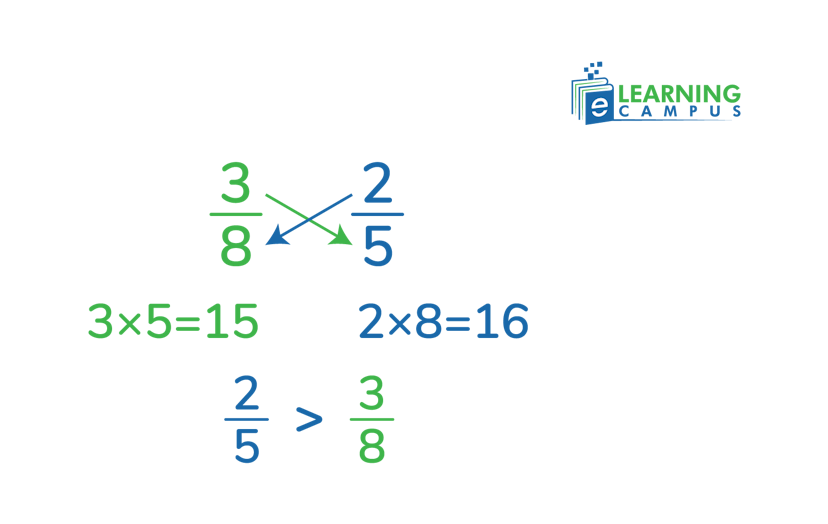
Cross multiplication is another way to compare fractions. In cross multiply to compare fractions, we simply multiply the numerator of one fraction by the denominator of another fraction.
We will understand it with the help of an example.
Example
Compare
Multiply the numerator of the first fraction by the numerator of the second fraction.
Therefore, ⅖ is greater than ⅜.
Compare Fractions on a Number Line
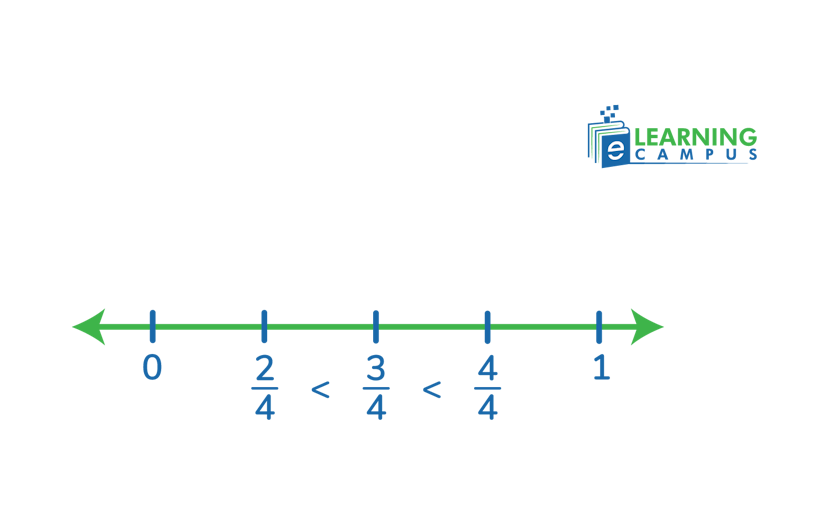
A number line helps visualize the fraction. We can easily compare fractions on a number line. On the number line, the fractions increase from left to right. It means that the fraction on the left side of the number line will be smaller than that on the right side.
Example
To compare the fractions of a number line, we will first plot them on the number line. As shown in the figure below.
From the given figure, we can evaluate that 2/4 is smaller than ¾ and ¾ is smaller than 4/4.
Compare Fractions Worksheet
Worksheets are essential tools to learn and understand the comparison of fractions. We provide you with the compare fractions worksheet PDF to fortify your foundation. Download and practice the worksheet to enhance your problem-solving skills.
Comparing fractions helps us to determine if one fraction is greater than, less than, or equal to another. We used several easy methods of comparing fractions to help students understand it easily.
Learn Math With Expert Tutors
Are you looking for expert online math tutors to learn math in easy steps? We are at your service. We have expert math teachers to make your kids champions of math. You will get one-on-one online math classes at your schedule.